
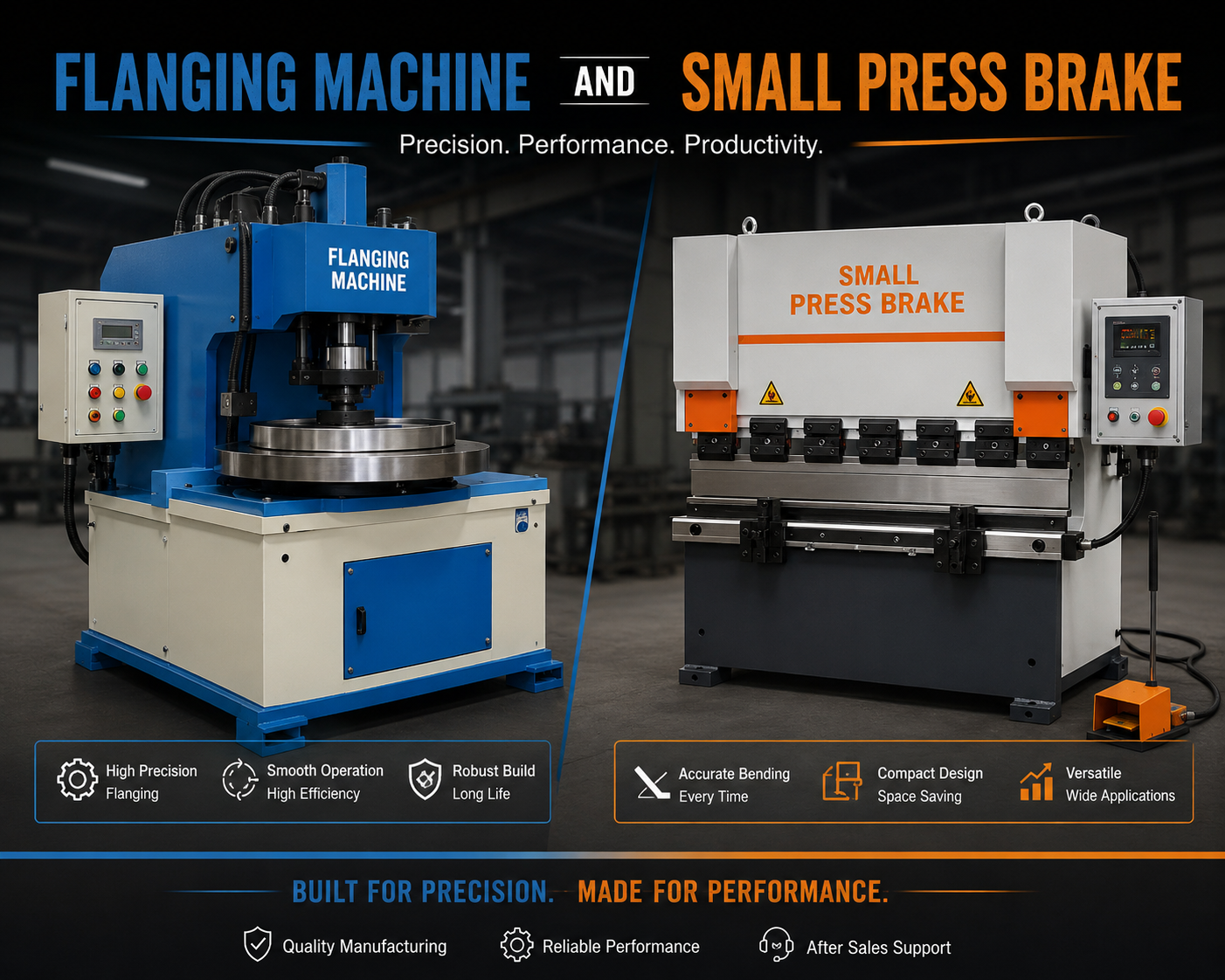
Metal fabrication workshops, in particular, must choose machinery that can handle different materials, product designs, and production requirements. Two useful solutions in this field are the flanging machine and the small press brake.
Although these machines perform different operations, both contribute to producing high-quality metal components. A flanging machine helps create formed edges and profiles, while a small press brake bends sheet metal into specific angles and shapes. Understanding their functions can help manufacturers plan better workflows, reduce material waste, and improve product quality.
Understanding the Role of a Flanging Machine in Metal Fabrication
A flanging machine is designed to form a flange along the edge of a metal sheet, pipe, or component. A flange can provide additional strength, create a joining surface, or help connect one part to another. Depending on the machine design, the operation may involve rolling, pressing, or other controlled forming techniques.
Manufacturers use a flanging machine when components require consistent edge profiles and accurate dimensions. It is particularly useful in industries where metal parts must fit together properly during assembly.
Common applications include:
-
Sheet metal enclosures and panels
-
Automotive body components
-
Industrial ducts and ventilation systems
-
Metal containers and tanks
-
HVAC equipment
-
Machinery housings and fabricated structures
Choosing the right flanging machine depends on material thickness, component dimensions, production volume, and the required flange profile.
Why Small Workshops Benefit from a Small Press Brake
Not every manufacturing business operates a large production facility. Small workshops, maintenance units, and specialist fabricators often need machinery that offers practical performance without occupying excessive floor space.
A small press brake is suitable for bending sheet metal into straight lines, angles, channels, and other profiles. Its compact design can make it a convenient option for businesses handling smaller components or limited production batches.
A small press brake can support several workshop activities, including:
-
Producing brackets and mounting plates
-
Bending electrical cabinet panels
-
Manufacturing small metal enclosures
-
Forming decorative metal components
-
Creating repair and replacement parts
-
Producing custom sheet metal products
For businesses with changing customer requirements, a small press brake can offer useful flexibility. Operators can work on different designs by adjusting tooling, bending settings, and material positioning.
How These Machines Support Different Production Requirements
A flanging machine and a small press brake are not interchangeable. Each machine performs a specific forming operation, and selecting the correct equipment helps prevent unnecessary production steps.
For example, a manufacturer producing metal ducts may use a flanging machine to prepare connection edges. A press brake may then be used to bend flat sheet metal into the required duct sections or supporting components.
The machines can complement each other when a product requires both edge forming and angular bending. However, the actual production sequence depends on the component design, material characteristics, and manufacturing process.
Before purchasing a flanging machine, businesses should identify the types of flange profiles they regularly produce. Similarly, buyers considering a small press brake should evaluate the maximum bending length, material thickness, tonnage, and tooling compatibility.
Important Factors to Consider Before Purchasing Equipment
Buying fabrication machinery is a long-term business decision. A machine should meet present production needs while providing enough flexibility for future requirements.
1. Material Compatibility
Different metals respond differently during forming. Mild steel, stainless steel, and aluminium have varying strength and flexibility characteristics. Check whether the selected machine can process the materials used in your workshop.
2. Production Capacity
Consider how many components need to be manufactured per shift or month. A flanging machine should match the dimensions and volume of the parts being produced. A small press brake should also have sufficient capacity for the intended bending work.
3. Accuracy and Repeatability
Consistent dimensions are important when components must fit together during assembly. Look for equipment with suitable adjustment systems, reliable positioning, and repeatable operation.
4. Available Workshop Space
Measure the installation area before purchasing machinery. Consider the space needed for material handling, operator movement, maintenance, and finished components.
5. Maintenance Requirements
Regular inspection and maintenance help protect machine performance. Ask about lubrication points, replacement parts, service support, and the availability of technical assistance.
Flanging Machine vs. Small Press Brake: Understanding the Difference
| Feature | Flanging Machine | Small Press Brake |
|---|---|---|
| Main purpose | Forms flanges along metal edges | Bends sheet metal into angles and profiles |
| Typical operation | Edge forming | Press-based bending |
| Common applications | Connections, rims, and formed edges | Brackets, panels, channels, and enclosures |
| Key selection factor | Flange profile and component size | Bending length, thickness, and tonnage |
| Production benefit | Consistent flange formation | Flexible sheet metal bending |
The comparison shows why manufacturers should select machinery according to the operation required rather than focusing only on machine size or purchase price.
Ways to Improve Workshop Productivity
Equipment alone does not guarantee efficient production. Proper planning, operator knowledge, and quality control are equally important.
Businesses can improve their fabrication workflow through the following practices:
-
Prepare technical drawings: Confirm dimensions, tolerances, and forming requirements before starting production.
-
Inspect raw materials: Check sheet thickness, surface condition, and material quality.
-
Use suitable tooling: Select tooling according to the material and component design.
-
Train operators: Make sure workers understand machine controls and safe operating procedures.
-
Check sample components: Test the first formed part before continuing with a larger batch.
-
Maintain equipment: Follow the manufacturer’s recommended inspection and maintenance schedule.
When a flanging machine is correctly adjusted, it can help maintain consistent edge formation. Likewise, a properly configured small press brake can reduce bending variations and unnecessary rework.
The Importance of Operator Training and Workplace Safety
Metal forming machinery requires trained operators who understand machine functions and workplace risks. Before using a flanging machine, employees should learn the correct material-loading procedure, adjustment process, and emergency controls.
A small press brake also requires careful handling because the bending area can create serious pinch and crush hazards. Operators should follow the manufacturer’s safety instructions and use appropriate protective equipment.
Good safety practices include keeping hands away from moving components, checking guards, avoiding loose clothing near machinery, and never bypassing safety systems. Regular training can help create a safer and more organized workshop.
How to Make the Right Investment for Your Business
The best machinery investment depends on the products a business manufactures and the operations it performs most frequently.
A company producing components with formed edges may benefit from a dedicated flanging machine. A workshop focused on custom sheet metal bending may find a small press brake more suitable. Businesses handling a wider range of fabrication work may need both types of equipment.
It is also important to compare the complete cost of ownership rather than the initial purchase price alone. Installation, tooling, operator training, maintenance, energy consumption, and service availability can influence long-term expenses.
Requesting a machine demonstration and discussing actual production samples with the supplier can help buyers make a more informed decision.
Frequently Asked Questions
1. What is the main purpose of a flanging machine?
A flanging machine forms an extended or shaped edge on metal components. These edges can improve strength, support assembly, or provide a joining surface.
2. What materials can a flanging machine process?
Depending on its design and capacity, it may process materials such as mild steel, stainless steel, and aluminium. Material thickness and forming requirements should be checked before use.
3. What is a small press brake used for?
A small press brake is used to bend sheet metal into specific angles, channels, brackets, and other shapes. It is commonly suitable for smaller fabrication jobs.
4. Can a small press brake handle different metal thicknesses?
Yes, within its rated capacity. The maximum thickness depends on material strength, bending length, machine tonnage, and tooling.
5. Are flanging machines suitable for small workshops?
Some models are suitable for smaller facilities, depending on their dimensions, operating requirements, and the size of the components being produced.
6. How does a press brake improve fabrication accuracy?
It applies controlled force to bend sheet metal. Appropriate tooling, positioning, machine settings, and operator technique help produce consistent results.
7. What should buyers check before purchasing a flanging machine?
Buyers should evaluate flange dimensions, material compatibility, machine capacity, adjustment features, maintenance needs, and supplier support.
8. Is a small press brake suitable for custom manufacturing?
Yes. It can be useful for producing different sheet metal components in small batches, provided the required dimensions and materials are within its capacity.
9. Do these machines require regular maintenance?
Yes. Cleaning, inspection, lubrication where specified, and timely replacement of worn components help maintain safe and reliable operation.
10. Can a flanging machine and a small press brake be used in the same workshop?
Yes. They can support different stages of a fabrication process when the product requires both flange formation and sheet metal bending.



Leave a Reply