
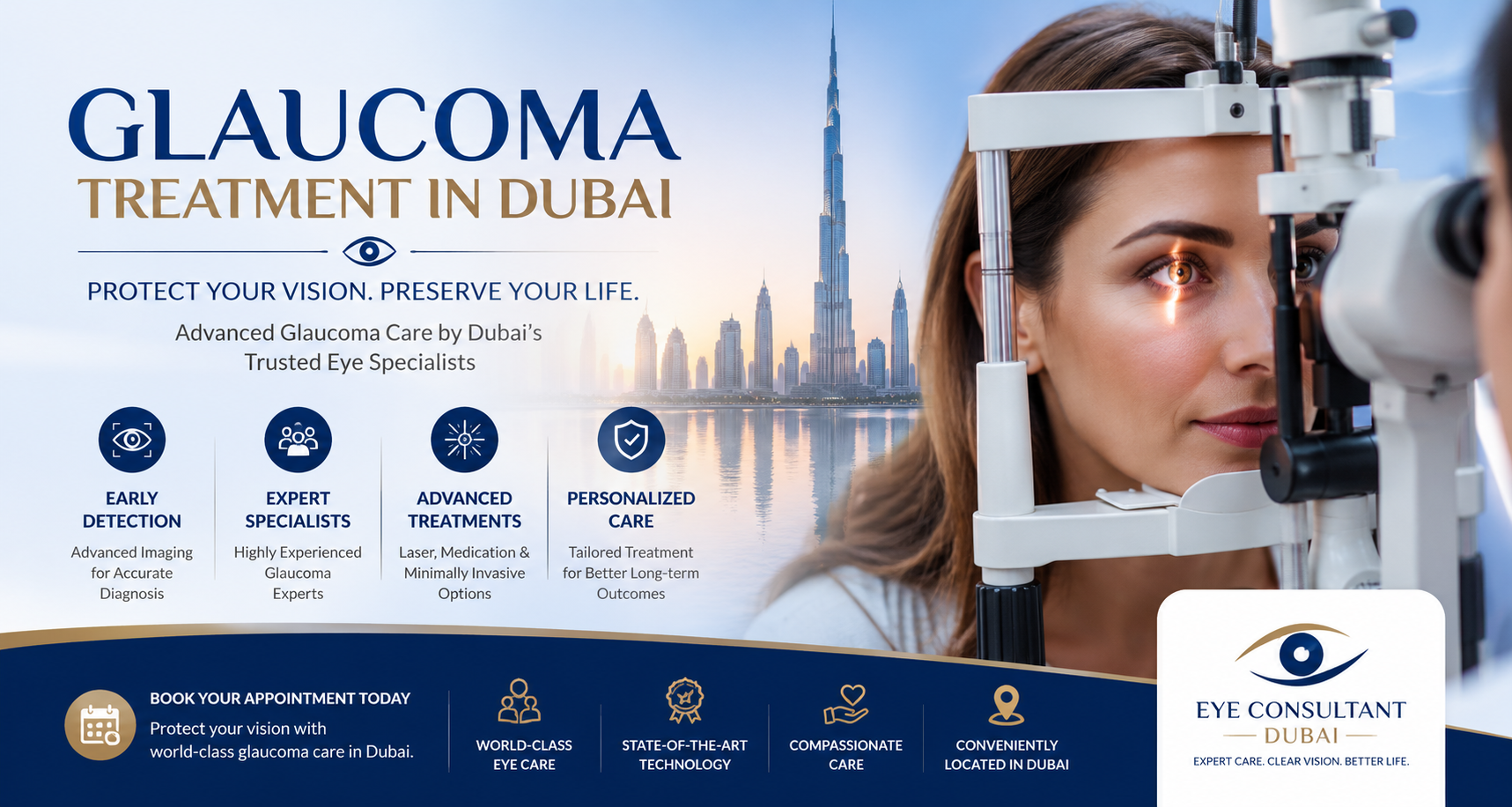
Imagine noticing that your vision is becoming slightly blurred or that you are having difficulty seeing clearly at the sides. You may not feel pain, and everything might seem normal during your daily routine. Yet, some eye conditions can quietly progress without obvious warning signs. This is one reason glaucoma treatment in Dubai has become an important part of modern eye care for people concerned about long-term vision health. Glaucoma is a group of eye conditions that can damage the optic nerve, often in association with increased pressure inside the eye. Early diagnosis and appropriate treatment can help slow or prevent further vision loss. Understanding the available treatments, diagnostic tests, benefits, limitations, and follow-up requirements can help you make informed decisions about your eye health.
What Is Glaucoma?
Glaucoma is a group of eye diseases that can cause progressive damage to the optic nerve. The optic nerve carries visual information from the eye to the brain.
In many cases, glaucoma is associated with elevated intraocular pressure (IOP), which can occur when fluid inside the eye does not drain properly. However, glaucoma can also develop when eye pressure is within a statistically normal range.
The condition may progress gradually, which means a person may not notice significant symptoms during the early stages. Once optic nerve damage occurs, the lost vision generally cannot be restored. Treatment therefore focuses on controlling risk factors and preventing or slowing further damage.
Why Is Early Glaucoma Detection Important?
Glaucoma is sometimes called a “silent” eye disease because certain forms can develop without noticeable symptoms in their early stages.
Regular eye examinations can identify changes before substantial vision loss occurs. A comprehensive glaucoma evaluation may include:
-
Measurement of intraocular pressure
-
Examination of the optic nerve
-
Visual field testing
-
Assessment of the drainage angle
-
Corneal thickness measurement
-
Retinal and optic nerve imaging
-
Review of personal and family eye-health history
These tests help an ophthalmologist understand whether glaucoma is present, how advanced it may be, and which treatment approach may be appropriate.
What Are the Common Types of Glaucoma?
Glaucoma is not a single condition. Different forms can require different approaches.
Open-Angle Glaucoma
Open-angle glaucoma is one of the most common forms. The drainage angle remains open, but fluid may not leave the eye efficiently. Pressure can gradually increase and contribute to optic nerve damage.
Angle-Closure Glaucoma
Angle-closure glaucoma occurs when the drainage angle becomes blocked or significantly narrowed. An acute attack can cause severe eye pain, redness, blurred vision, halos around lights, headache, nausea, or vomiting.
Sudden symptoms of this type require urgent medical attention.
Normal-Tension Glaucoma
In normal-tension glaucoma, optic nerve damage can occur even when measured eye pressure is not unusually high. Other factors may contribute to optic nerve vulnerability.
Secondary Glaucoma
Secondary glaucoma can develop because of another eye condition, injury, medication, inflammation, or other underlying causes. Treatment may involve addressing both the glaucoma and its contributing cause.
What Treatment Options Are Available for Glaucoma?
The right treatment depends on the type and severity of glaucoma, eye pressure, optic nerve condition, age, general eye health, and other individual factors.
1. Prescription Eye Drops
Eye drops are commonly used as an initial treatment for many patients.
Depending on the medication, drops may:
-
Reduce the production of fluid inside the eye
-
Improve fluid drainage
-
Lower intraocular pressure
-
Help protect the optic nerve from further pressure-related damage
Following the prescribed dosage and schedule is important because inconsistent use can reduce treatment effectiveness.
2. Laser Treatment
Laser procedures may be recommended when medication alone is insufficient, unsuitable, or when a particular type of glaucoma responds well to laser therapy.
Examples include laser procedures designed to improve fluid drainage or reduce fluid production.
Laser treatment is not suitable for every patient, so an ophthalmologist must first assess the type and stage of glaucoma.
3. Glaucoma Surgery
When medication and laser treatment do not adequately control the condition, surgery may be considered.
Surgical approaches can create or improve pathways for fluid drainage, helping reduce eye pressure.
The specific procedure depends on the patient’s condition and treatment history. Modern glaucoma care may include several surgical techniques, including minimally invasive approaches for selected patients.
Advantages and Disadvantages of Glaucoma Treatment
Treatment can play an important role in preserving remaining vision, but every approach has potential benefits and limitations.
| Advantages | Disadvantages / Considerations |
|---|---|
| Can help lower elevated eye pressure | Treatment may require long-term monitoring |
| May slow progression of glaucoma | Eye drops can cause irritation or other side effects |
| Can help protect the optic nerve from further damage | Some patients may need more than one treatment |
| Laser treatment may reduce dependence on medication in selected cases | Laser treatment is not suitable for every type of glaucoma |
| Surgical treatment can provide stronger pressure control when other methods are insufficient | Surgery carries potential risks and requires recovery and follow-up |
| Regular monitoring can identify changes early | Existing optic nerve damage generally cannot be reversed |
The most appropriate treatment is determined after a detailed eye examination rather than simply choosing the most advanced procedure available.
What Happens During a Glaucoma Consultation?
A glaucoma assessment generally begins with a discussion about symptoms, medical history, medications, family history, and previous eye problems.
The ophthalmologist may then perform several diagnostic tests.
Depending on the findings, the doctor may explain:
-
Whether glaucoma is present.
-
Which type of glaucoma may be involved.
-
Whether eye pressure is elevated.
-
Whether the optic nerve shows signs of damage.
-
Whether visual field changes are present.
-
How advanced the condition appears to be.
-
Which treatment options may be appropriate.
-
How frequently follow-up examinations are needed.
This individualized approach is important because glaucoma can behave differently from one person to another.
How Is Glaucoma Monitored After Treatment?
Treatment does not necessarily mean that glaucoma has disappeared. In many cases, glaucoma requires lifelong monitoring.
Follow-up appointments may involve:
-
Eye pressure measurement
-
Optic nerve examination
-
Visual field assessment
-
OCT or other imaging
-
Medication review
-
Assessment of treatment response
The frequency of follow-up depends on factors such as glaucoma severity, pressure control, treatment type, and rate of progression.
Patients should also tell their ophthalmologist if they experience new symptoms or difficulty using prescribed eye drops.
Can Glaucoma Damage Be Reversed?
One of the most important things to understand about glaucoma is that existing optic nerve damage generally cannot be reversed.
However, appropriate treatment can help reduce the risk of additional damage. This is why early detection and consistent follow-up are so important.
Treatment goals are usually centered on maintaining the patient’s remaining vision and keeping the disease under control.
Why Choose Specialist Eye Care in Dubai?
Dubai offers access to modern ophthalmic diagnostic and treatment services. Patients may have access to advanced imaging technologies, laser procedures, surgical techniques, and specialist consultations.
However, technology alone does not determine the appropriate treatment. A careful diagnosis, individualized treatment plan, medication compliance, and long-term monitoring are equally important.
For patients seeking professional guidance, Eye Consultant Dubai can provide information and consultation related to glaucoma evaluation and eye-care management.
Who May Need a Glaucoma Evaluation?
A glaucoma assessment may be particularly important for people who have certain risk factors, including:
-
Increasing age
-
A family history of glaucoma
-
Previous eye injury
-
Certain medical conditions
-
Long-term use of corticosteroids
-
Significant differences in eye pressure
-
Previous abnormal eye examination results
Even without obvious symptoms, routine eye examinations can help identify glaucoma-related changes.
Frequently Asked Questions About Glaucoma Treatment in Dubai
1. What is glaucoma treatment?
Glaucoma treatment aims to control factors associated with optic nerve damage, commonly by lowering intraocular pressure. Treatment may involve eye drops, laser therapy, surgery, or a combination of approaches.
2. Can glaucoma be cured permanently?
Glaucoma usually cannot be completely cured, but it can often be managed. Treatment focuses on controlling the disease and reducing the risk of further vision loss.
3. Is glaucoma treatment painful?
Many glaucoma treatments are performed with methods designed to minimize discomfort. The experience varies according to the procedure and individual patient.
4. Can glaucoma be treated without surgery?
Yes. Many patients are initially managed with prescription eye drops or laser treatment. Surgery may be considered when other treatments do not provide adequate control.
5. How long does glaucoma treatment take?
The duration varies according to the treatment. Eye drops are an ongoing treatment, while laser or surgical procedures are performed during specific treatment sessions followed by monitoring.
6. Can glaucoma cause blindness?
Untreated or poorly controlled glaucoma can cause severe and permanent vision loss. Early diagnosis and appropriate management can help reduce the risk of significant progression.
7. Can glaucoma be detected early?
Yes. Comprehensive eye examinations can identify glaucoma-related changes before noticeable vision problems develop in some patients.
8. How often should glaucoma patients have eye examinations?
The recommended frequency depends on the severity of glaucoma, treatment response, eye pressure, and individual risk factors. The ophthalmologist determines an appropriate follow-up schedule.
9. Can glaucoma patients live normally?
Many people with properly managed glaucoma continue their usual activities. Regular treatment, follow-up examinations, and adherence to prescribed medication are important.
10. When should I seek urgent eye care?
Sudden severe eye pain, sudden blurred vision, significant redness, halos around lights, headache, nausea, or vomiting can occur with acute angle-closure glaucoma and require urgent medical evaluation.
Final Thoughts
Glaucoma can be challenging because vision loss may occur gradually and without obvious early warning signs. The good news is that timely diagnosis, appropriate treatment, and consistent monitoring can help manage the condition and protect remaining vision.
If you are experiencing changes in your vision, have glaucoma risk factors, or have been advised to undergo further testing, consider arranging a comprehensive ophthalmic evaluation. A specialist can assess your eyes, explain your results, and discuss treatment options suited to your individual condition.








Leave a Reply