
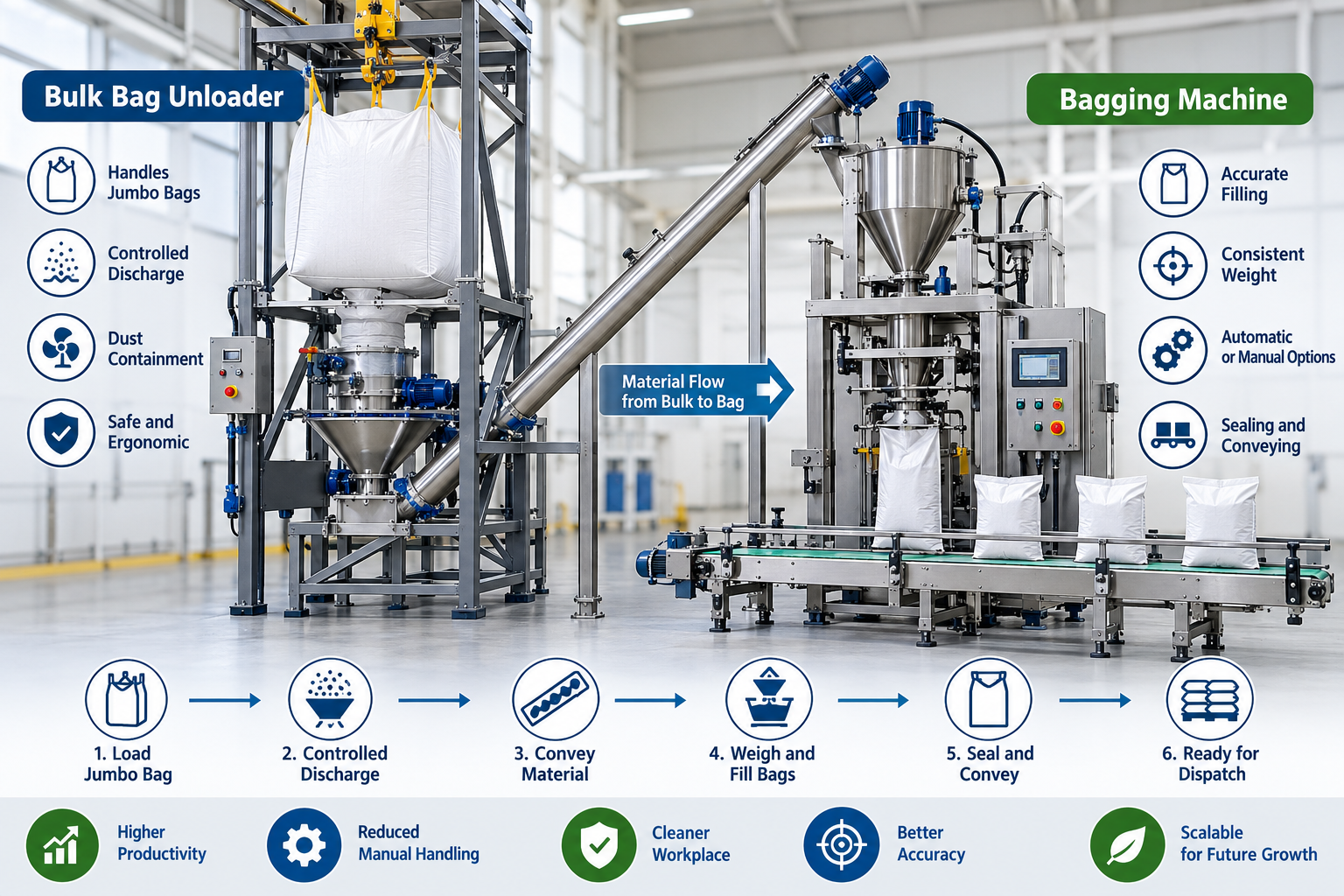
In bulk material processing, lost profit rarely comes from one dramatic failure. It often disappears through small overfilled bags, spilled powder, slow changeovers, and production stops that become routine. Choosing a bagging machine and a bulk bag unloader is therefore more than an equipment purchase. It is a decision about how consistently a plant controls its material, labor, and packaging costs.
The most useful approach begins with three questions: Where is product being lost? What interrupts production? Which improvements can be measured after installation?
Understand Where Packaging Costs Begin
A factory may buy raw material by the tonne but sell finished goods in carefully weighed bags. Between receiving and dispatch, every transfer creates opportunities for waste.
Material can remain trapped inside jumbo bags, accumulate around transfer points, or escape as airborne dust. Inaccurate filling can also create costly product giveaway. Even minor excess weight per package becomes significant across thousands of bags.
A bulk bag unloader addresses the receiving end of this problem, while a bagging machine controls the final packaging stage. Examining both processes reveals costs that are easy to overlook when evaluating machines separately.
Reduce Giveaway With Better Filling Control
Product giveaway occurs when a package receives more material than required. It may appear harmless, but consistently overfilled bags reduce the quantity available for sale.
A correctly configured bagging machine can use controlled feeding and weighing to improve consistency. Many applications benefit from a fast initial fill followed by a slower finishing stage.
Factors That Influence Weight Consistency
-
Changes in product density or moisture
-
Irregular flow from upstream equipment
-
Vibration near the weighing system
-
Inadequate calibration or unsuitable feed settings
-
Material continuing to fall after the feeder stops
Turn Measurements Into Decisions
Record average filled weight, variation, rejected bags, and product giveaway during each shift. These figures establish whether adjustments to the bagging machine are improving performance rather than simply increasing speed.
Recover More Material During Unloading
Jumbo bags do not always empty cleanly. Fine powders may compact during transportation; cohesive materials may form bridges that block discharge.
A well-selected bulk bag unloader provides suitable bag support, outlet access, and controlled emptying. Flow aids may help with difficult materials, but they should be selected using product testing rather than assumptions.
Compare the weight entering the process with the quantity received downstream. This helps identify retained material, spills, and other losses.
For dusty products, proper containment also reduces cleaning demands. However, dust-control choices must reflect actual hazards, especially where combustible materials are involved.
Compare Operational Problems and Potential Improvements
| Production issue | Equipment consideration | Result to measure |
|---|---|---|
| Overfilled small bags | Bagging machine weighing controls | Average giveaway |
| Material remaining in jumbo bags | Bulk bag unloader discharge assistance | Residual material |
| Frequent dust cleanup | Enclosed transfer connections | Cleanup hours |
| Unplanned product stops | Accessible equipment and maintenance points | Downtime minutes |
| Slow product changeovers | Cleanable contact parts and controls | Changeover duration |
This comparison prevents a common purchasing mistake: paying for a faster machine when the real problem is unstable material flow. Review these figures monthly so purchasing decisions reflect results, not anecdotal operator feedback.
Build a Packaging Line Around Actual Demand
Equipment capacity should match the entire production process, not just a supplier’s advertised maximum. A high-speed bagging machine provides little benefit if material reaches it inconsistently.
Likewise, a bulk bag unloader with insufficient discharge capability may starve downstream equipment. Oversizing either machine can increase capital costs without improving completed output.
Start by calculating the required number of finished bags per hour. Then consider bag changes, cleaning, operator breaks, inspections, and planned maintenance.
Questions Before Requesting Quotations
-
What materials and bag sizes will run most frequently?
-
How much variation occurs between material batches?
-
What are the realistic daily operating hours?
-
Which activities currently create the longest delays?
-
What level of automation can operators maintain confidently?
Supplier discussions become more useful when they begin with measured requirements rather than general promises about productivity.
Consider Hygiene, Safety, and Traceability
For food, chemical, and sensitive industrial materials, equipment choices affect product integrity as well as output.
Specify contact-surface materials appropriate to the product. Examine cleaning access, potential contamination points, and methods for separating different batches.
A bulk bag unloader may need a secure discharge connection to reduce exposure. A bagging machine may require label verification, weight records, or reject handling.
Documented operating procedures and operator training remain essential. Automation supports process control, but it does not replace hazard assessment or routine inspection.
Frequently Asked Questions
1. How can a bagging machine reduce product waste?
Accurate weighing and controlled feeding can reduce unnecessary overfilling.
2. Why does jumbo bag residue matter?
Material left inside containers reduces usable yield and complicates inventory reconciliation.
3. Does a bulk bag unloader suit every powder?
No. Cohesive, hazardous, or moisture-sensitive powders may require specialized configurations.
4. Is faster filling always more profitable?
No. Speed gains have limited value when they increase rejects or interruptions.
5. Which metric should manufacturers track first?
Start with the largest verified loss, such as giveaway, downtime, or spillage.
6. Can these machines improve batch traceability?
They can support traceability when integrated with suitable records and controls.
7. How should equipment suppliers be compared?
Assess tested performance, maintainability, safety provisions, and total ownership costs.
8. What causes inconsistent bag weights?
Changing material flow, poor calibration, and unsuitable feeding settings are common causes.
9. Can unloading equipment reduce operator effort?
Yes. Appropriate lifting and discharge arrangements can reduce repetitive manual handling.
10. When should a plant upgrade its packaging process?
Consider upgrading when measurable losses persist despite reasonable maintenance and process adjustments.





Leave a Reply