
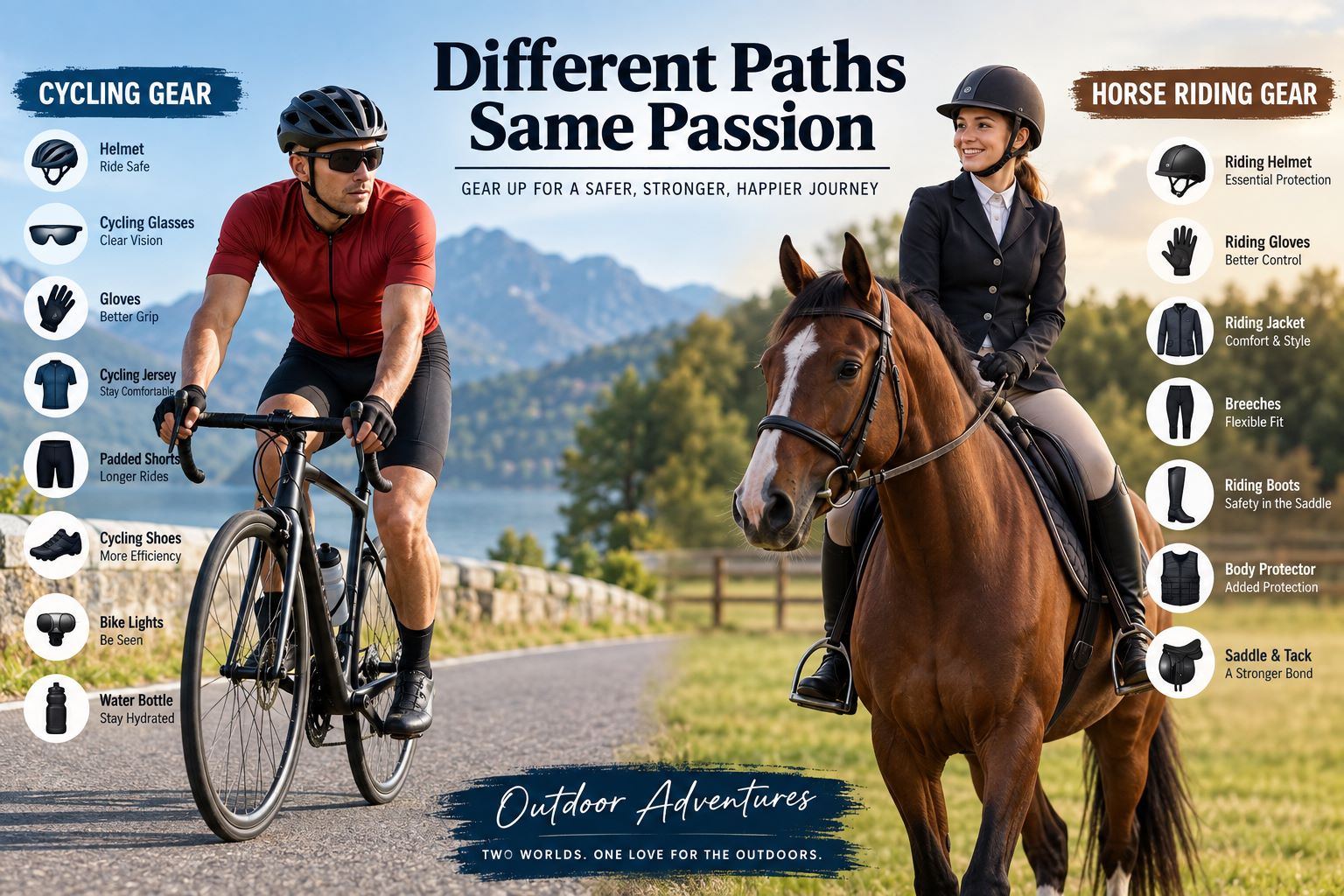
Outdoor adventures improve when equipment supports rather than distracts you. Cycling and horse riding both demand balance, awareness, comfort, and protection. Choosing Cycling Gear and Horse Riding Gear thoughtfully helps beginners gain confidence and enthusiasts focus. The secret is not buying everything. It is understanding what protects you, what improves control, and what suits your activity.
Why the Right Equipment Changes the Experience
Equipment protects vulnerable areas, supports movement, and handles changing conditions. A cyclist needs visibility and freedom to pedal. An equestrian needs stable contact with the saddle and clear communication with the horse.
Both sports reward correct fit. Loose gloves can interfere with grip, while poorly fitted footwear can affect balance. Start with safety essentials, then add accessories that improve your routine.
Build Your Kit Around Real Conditions
Consider skill, weather, terrain, and duration before shopping.
Prioritize Fit Over Appearance
Looks matter less than secure fastenings, breathable fabrics, and movement.
Essential Cycling Gear for Everyday and Adventure Riders
A Cycling Gear kit should begin with protective basics.
-
Helmet: Select a cycling-specific helmet that meets applicable safety standards and fits securely without rocking.
-
Gloves: Choose padded or lightweight options that maintain handlebar control and reduce friction.
-
Clothing: Moisture-managing jerseys and comfortable shorts help prevent irritation during longer rides.
-
Footwear: Shoes should grip the pedals reliably and suit your riding style.
-
Visibility accessories: Front and rear lights, reflectors, and bright details help other road users notice you.
-
Repair essentials: A spare tube, pump, and basic multitool can make small roadside problems manageable.
For commuting, secure storage and weather protection may take priority. On trails, durability, eye protection, and hydration become important.
Essential Horse Riding Gear for Control and Comfort
Good Horse Riding Gear protects riders while allowing balanced communication with horses.
-
Equestrian helmet: Use a properly fitted helmet designed and safety-rated for horse riding.
-
Riding boots: Appropriate boots with a defined heel help reduce the chance of feet slipping through stirrups.
-
Breeches or jodhpurs: Flexible riding trousers minimize bulky seams and support comfortable saddle contact.
-
Riding gloves: A secure grip improves rein handling without restricting finger movement.
-
Body protector: Consider an appropriately fitted protector for activities where impact risks warrant one.
-
Weather layers: Breathable, close-fitting layers help maintain comfort without loose fabric catching equipment.
Saddles, stirrups, and bridles must also suit the horse, rider, and discipline. An experienced instructor or qualified fitter can help assess their suitability.
Cycling Gear vs. Horse Riding Gear: Important Differences
Although both activities use protective clothing, their equipment is not interchangeable.
| Feature | Cycling | Horse riding |
|---|---|---|
| Helmet | Built for cycling hazards | Designed for equestrian falls |
| Footwear | Pedal grip and efficiency | Stable stirrup positioning |
| Gloves | Handlebar grip and cushioning | Rein feel and control |
| Clothing | Aerodynamics and ventilation | Saddle contact and flexibility |
| Accessories | Lights, repair tools, hydration | Grooming tools, suitable tack |
Never substitute a bicycle helmet for an equestrian helmet merely because both cover the head. Each is designed and tested around different requirements.
How to Choose Equipment Without Overspending
Smart purchasing starts with a simple question: which item solves a real problem today?
-
Identify your activity. Commuting, mountain biking, trail riding, and arena lessons have different demands.
-
Measure carefully. Follow manufacturer sizing guidance, especially for helmets and protective equipment.
-
Check construction. Examine seams, closures, adjustment points, and materials for dependable workmanship.
-
Test movement. Bend, walk, reach, and mimic riding positions to spot pressure points.
-
Plan maintenance. Choose products you can clean, inspect, and store correctly.
Avoid purchasing specialized accessories before learning whether your instructor, route, or discipline actually requires them.
Maintenance Habits That Protect Your Investment
Well-maintained Cycling Gear and Horse Riding Gear can remain comfortable and functional longer. Clean helmets according to manufacturer instructions, and inspect them for damage. Replace a helmet after a significant impact or whenever its maker recommends replacement.
Wash technical garments with suitable products, dry gloves thoroughly, and examine footwear for worn soles or damaged fastenings. Cyclists should check tire pressure, brakes, and lights before heading out. Equestrians should inspect tack for wear and seek guidance before using questionable equipment.
Store everything somewhere dry, away from unnecessary heat and direct sunlight. Keeping a basic checklist prevents last-minute surprises.
Frequently Asked Questions
1. What cycling equipment should beginners buy first?
Start with a fitted cycling helmet, dependable lights where needed, comfortable clothing, and basic repair supplies.
2. Is horse riding equipment different from cycling equipment?
Yes. Helmets, footwear, and clothing are designed around different movements, surfaces, and potential impacts.
3. Can cyclists use regular sports gloves?
They can, but cycling-specific gloves may offer more suitable grip, cushioning, and handlebar control.
4. Why do riding boots need heels?
A suitable heel helps limit the risk of the foot sliding through a stirrup.
5. Are expensive accessories always better?
No. Appropriate fit, proven safety requirements, and useful features matter more than price alone.
6. How should a riding helmet fit?
It should sit level, remain stable, and follow the manufacturer’s fitting guidance without painful pressure.
7. What clothes work for long bicycle rides?
Breathable layers and well-fitting shorts help manage moisture, rubbing, and changing temperatures.
8. Do beginner horse riders need body protectors?
Requirements vary by activity and venue; ask your instructor about suitable protection for your lessons.
9. How often should equipment be inspected?
Check key safety items before each session, then perform more detailed inspections regularly.
10. Can one pair of shoes work for both sports?
Activity-specific footwear is preferable because pedals and stirrups require different support.




Leave a Reply