
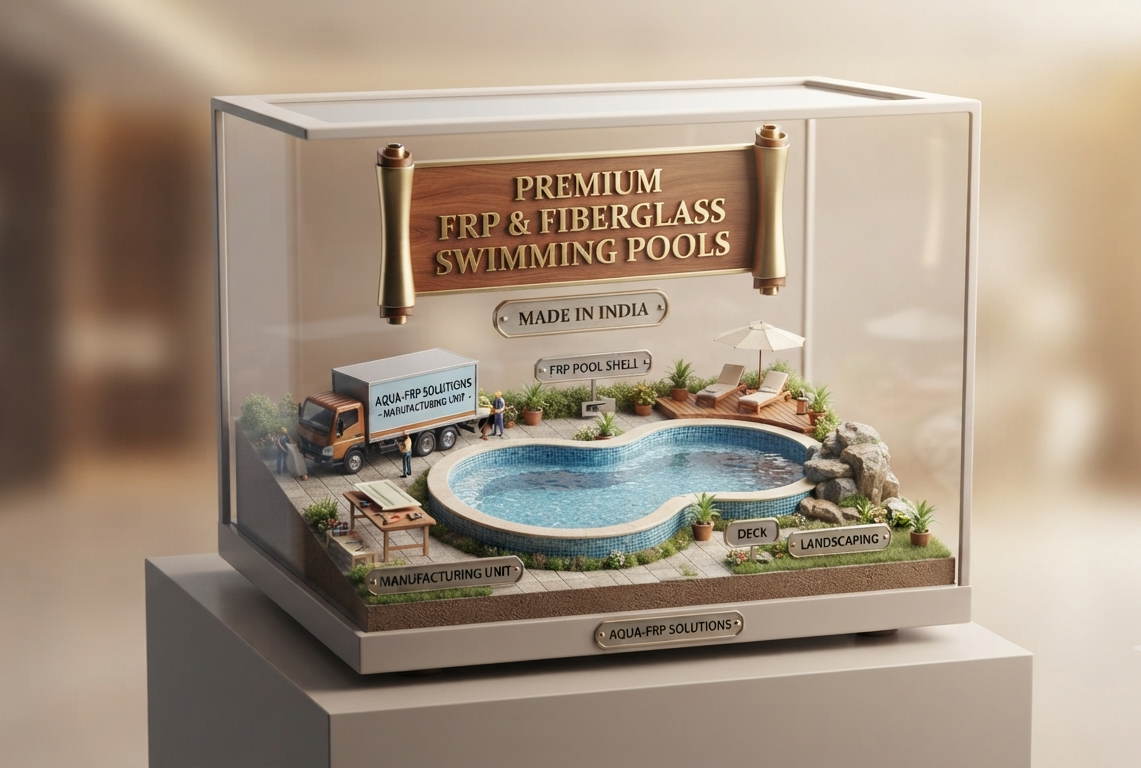
A swimming pool should combine lasting performance, manageable maintenance, realistic expectations, and a design that fits its surroundings. For homeowners, resorts, farmhouses, and wellness facilities, prefabricated fiberglass pools can offer an attractive alternative to conventional concrete construction. Choosing reliable frp swimming pool manufacturers in india is essential because shell quality, site preparation, and installation methods determine how well a pool performs over time.
This guide explains the technology, benefits, purchasing considerations, and questions worth asking before investing.
What Is an FRP Swimming Pool?
FRP stands for fiber-reinforced plastic, a composite that combines reinforcing fibers, commonly glass, with a polymer resin. A fiberglass pool usually consists of a factory-molded shell with a smooth, protective interior surface.
Unlike concrete pools formed and finished on location, many FRP shells arrive as single prefabricated units. However, larger or specialized projects may require different fabrication and assembly approaches. Reputable fiberglass swimming pool manufacturers should explain exactly how their products are built and installed.
Why Choose a Fiberglass Pool?
The practical advantages depend on the product specification and local site conditions.
-
Smooth finish: A well-finished interior feels comfortable and makes routine surface cleaning easier.
-
Faster on-site installation: A prefabricated shell can reduce construction work compared with a fully site-built structure.
-
Design flexibility: Manufacturers may offer rectangular, curved, plunge, and family-oriented configurations.
-
Lower routine surface upkeep: A sound, nonporous finish generally needs less scrubbing than some porous surfaces.
-
Consistent factory production: Controlled molding can improve repeatability when material selection and quality checks are appropriate.
These advantages do not eliminate filtration, sanitization, structural engineering, or periodic repairs. Every pool still needs a maintenance plan.
FRP Pools Versus Concrete Pools
| Consideration | FRP or fiberglass pool | Concrete pool |
|---|---|---|
| Construction | Often prefabricated shell | Mostly built on-site |
| Design | Depends on available molds | Highly customizable |
| Installation | Shell placement and connections | Forming, curing, finishing |
| Interior | Typically smooth gelcoat surface | Varies with selected finish |
| Transport | Large shells require access | Materials transported separately |
| Maintenance | Finish-specific care | Finish-specific care |
Neither approach is universally better. Evaluate the available space, desired shape, site access, budget, and expected use.
How to Evaluate Manufacturers in India
Shortlisting frp swimming pool manufacturers in india requires more than comparing product photographs. Request technical details and a written project scope.
Check Shell Construction
Ask about resin systems, fiberglass reinforcement, protective coatings, laminate thickness, manufacturing controls, and intended service conditions. An appropriate design must account for water pressure and surrounding ground conditions.
Examine Quality Documentation
Request drawings, specifications, material information, inspection procedures, and warranty terms. Avoid assuming that an attractive finish proves structural integrity.
Review Installation Experience
Discuss excavation dimensions, base preparation, lifting equipment, plumbing connections, backfilling, and groundwater management. Ask who takes responsibility for each stage and whether installation supervision is included.
Understand After-Sales Support
Find out how repairs, replacement fittings, surface defects, and service inquiries are handled. A warranty is useful only when its coverage, exclusions, and claim process are clear.
Typical Installation Process
Experienced fiberglass swimming pool manufacturers should coordinate with the installer and relevant technical specialists before work begins.
-
Site assessment: Measure access routes, soil conditions, underground services, and drainage requirements.
-
Pool selection: Agree on dimensions, depth, steps, seating, and equipment needs.
-
Engineering review: Confirm excavation design, support, groundwater risks, and applicable approvals.
-
Base preparation: Construct a stable foundation according to the approved installation specification.
-
Shell placement: Lift and position the pool using suitable handling methods.
-
Connections and backfill: Install plumbing and electrical systems while following the manufacturer’s filling and backfilling sequence.
-
Commissioning: Test circulation, leaks, water balance, safety provisions, and operating controls.
Incorrect backfilling or inadequate groundwater planning can damage even a properly manufactured shell.
Factors That Influence Pool Cost
A single advertised shell price rarely represents the complete project. Quotes may differ because of:
-
Pool dimensions, profile, and custom features.
-
Shell materials, finish options, and reinforcement details.
-
Transportation distance, unloading equipment, and access restrictions.
-
Excavation, base construction, drainage, and groundwater controls.
-
Pumps, filters, lighting, heating, and water-treatment equipment.
-
Surrounding decking, permissions, installation labor, and ongoing maintenance.
Request an itemized quotation with exclusions identified. Compare equivalent specifications rather than choosing on price alone.
Maintenance Tips for Long-Term Performance
Pool ownership involves regular attention, even with a smooth fiberglass finish. Monitor sanitizer levels and water chemistry according to the equipment and surface manufacturer’s recommendations. Clean filters, remove debris, inspect seals, and address leaks promptly. Avoid abrasive cleaning tools or chemicals that may harm the surface. Where groundwater is present, seek professional guidance before draining the pool.
Frequently Asked Questions
1. Are FRP and fiberglass pools the same?
In swimming pool discussions, the terms often overlap because fiberglass is a common reinforcement used in FRP shells.
2. Can these pools be installed in small backyards?
Yes, when shell dimensions, transport access, and site conditions permit.
3. Are fiberglass pools suitable for resorts?
They can be, provided design, expected usage, filtration, and safety requirements are addressed.
4. How long does installation take?
Timelines depend on excavation, approvals, site access, equipment, and installation complexity.
5. Can I choose a custom shape?
Options depend on the manufacturer’s molds and fabrication capabilities.
6. Do fiberglass pools need waterproofing?
Their shell is designed to contain water, but joints, fittings, and surrounding construction still require careful detailing.
7. Are they maintenance-free?
No. Water treatment, cleaning, and equipment servicing remain essential.
8. Can the surface be repaired?
Many localized defects are repairable by qualified composite technicians.
9. What if the property has high groundwater?
A competent designer must assess hydrostatic pressure, drainage, and installation measures.
10. What should a quotation include?
Shell specifications, delivery, installation responsibilities, equipment, warranties, exclusions, and payment milestones.






Leave a Reply