
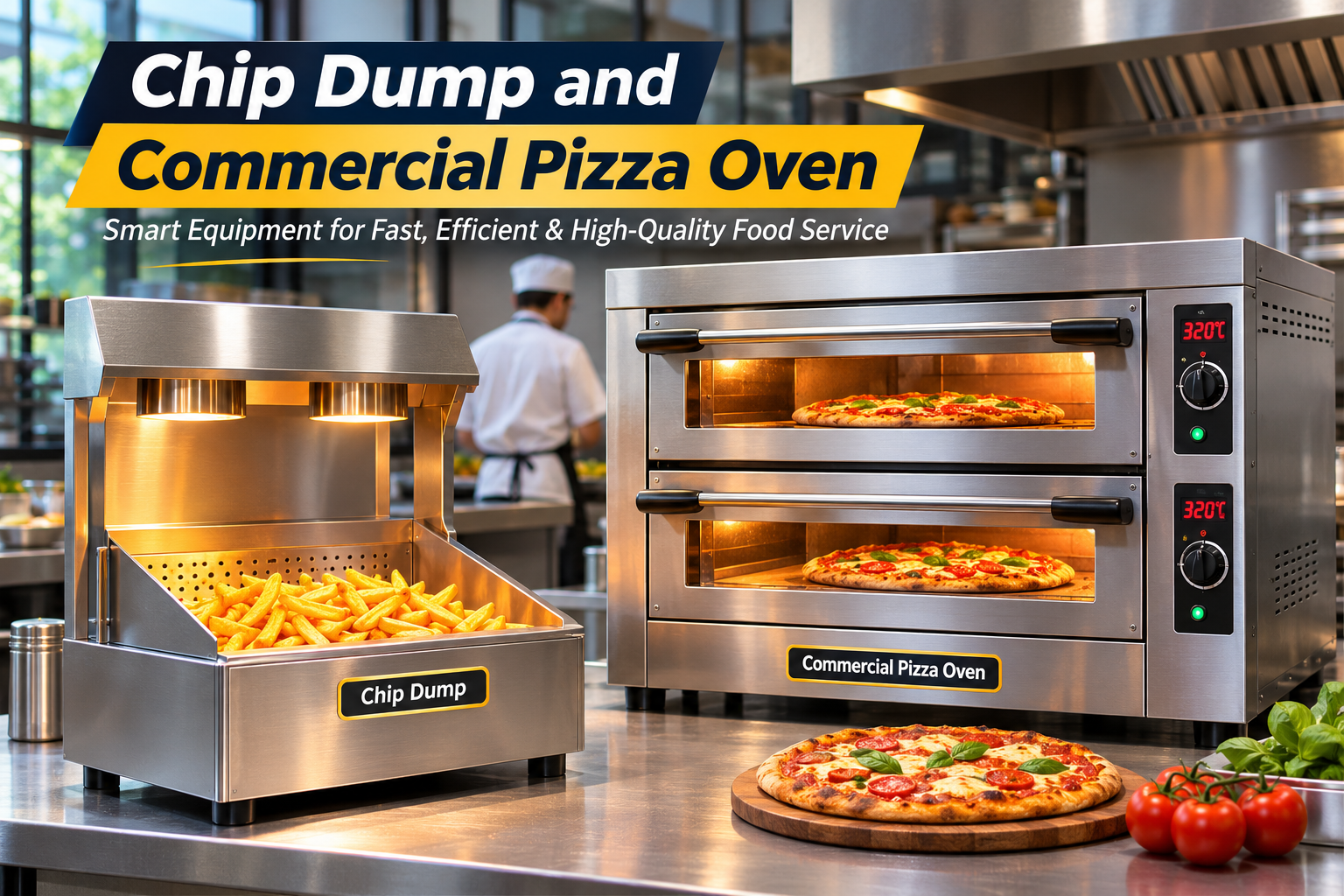
Busy kitchens depend on speed, consistency, and clear workflows. Whether a business serves takeaway fries, artisan pizzas, or a mixed fast-food menu, the right equipment helps staff deliver dependable results during demanding service periods. A chip dump and a commercial pizza oven perform different jobs, yet both can improve the way a kitchen handles popular orders.
Understanding their functions makes purchasing easier. Here is what to consider before investing.
What Is a Chip Dump?
A chip dump is a foodservice station designed to receive freshly cooked chips or fries after frying. Typically fitted with a perforated tray, it lets excess oil drain away while keeping portions accessible for seasoning and serving. Many models include overhead heat lamps or another warming system to help maintain serving quality for a limited period.
Unlike a fryer, a chip dump does not cook raw potatoes. Its purpose is to support the final stage between frying and plating. Staff can transfer batches quickly, season them evenly, and portion orders without repeatedly reaching into the fryer area.
Why a Commercial Pizza Oven Matters
A commercial pizza oven is built for frequent use, controlled heat, and reliable baking across multiple orders. Models use electric, gas, or wood-fired heat for varying production volumes.
The oven affects crust texture, cheese melting, cooking speed, and overall consistency. A compact countertop unit may suit a café with occasional pizza orders, while a deck or conveyor configuration can support a specialist pizzeria or higher-throughput operation.
Choose a commercial pizza oven that matches your menu and output.
Key Benefits for High-Volume Kitchens
Both appliances address distinct preparation bottlenecks.
-
Faster dispatch: A chip dump creates a dedicated place to finish and portion fried sides.
-
Reliable baking: A well-matched commercial pizza oven supports repeatable cooking results.
-
Better station organization: Separating frying, holding, baking, and packing reduces unnecessary movement.
-
Improved service rhythm: Staff can coordinate pizza preparation and side orders more efficiently.
-
Professional presentation: Proper handling helps pizzas arrive attractively baked and fries remain appealing.
A clear station layout helps new team members learn preparation steps and reduces confusion during peak service. Neither appliance replaces good training. Timely service, portion control, and careful food handling remain essential.
Chip Dump vs. Commercial Pizza Oven: Quick Comparison
| Feature | Chip Dump | Commercial Pizza Oven |
|---|---|---|
| Primary purpose | Drain, season, and briefly hold fries | Bake pizzas and related menu items |
| Cooking function | Does not fry or cook raw chips | Provides primary baking heat |
| Typical location | Beside fryer and packing station | Pizza preparation and baking zone |
| Main consideration | Drainage, access, and warming design | Capacity, heat control, and bake quality |
| Daily upkeep | Clean trays and remove food residue | Clean baking surfaces and inspect components |
Evaluate each against its specific operating requirements.
How to Choose the Right Equipment
Before buying, map the kitchen’s order flow from preparation to customer collection. Choose specifications that solve real problems.
-
Estimate demand. Count peak-hour portions and pizzas rather than relying on daily averages alone.
-
Measure available space. Allow for safe access, ventilation, cleaning, and staff movement.
-
Review power and fuel. Confirm electrical capacity, gas connections, and installation requirements.
-
Check food-contact materials. Prefer accessible, durable surfaces that can be cleaned thoroughly.
-
Assess controls and workflow. Look for practical temperature management and straightforward operation.
-
Compare support. Consider warranty coverage, spare parts, servicing, and total ownership costs.
For a chip dump, prioritize convenient tray removal, effective drainage, and easy portioning. For a commercial pizza oven, focus on baking consistency, usable chamber size, recovery between orders, and compatibility with the pizzas you sell.
Setup, Safety, and Maintenance Tips
Place units logically in the production sequence. Keep the frying station separate from customer collection routes and position pizza equipment near dough preparation without blocking walkways.
Follow the manufacturer’s installation instructions and applicable local fire, electrical, ventilation, and food-safety requirements. Heated holding is not a substitute for validated time-and-temperature controls. Monitor food quality and discard items according to your documented safety procedures.
Daily cleaning also protects performance. Remove crumbs and grease, wash removable components as directed, and inspect electrical leads, controls, and ventilation openings. Schedule professional servicing when recommended. Never clean a hot or energized appliance unless the manufacturer’s approved procedure specifically permits it.
Frequently Asked Questions
1. What does a chip dump do?
It collects fried chips, allows excess oil to drain, and provides a convenient station for seasoning and serving.
2. Does a chip dump cook fries?
No. Fries are cooked in a fryer before moving to the station for finishing and short holding.
3. Is a heated chip dump necessary?
Not always. Its usefulness depends on order volume, service timing, and your approved holding procedures.
4. What is the best commercial pizza oven type?
The best type depends on pizza style, available space, utilities, budget, and expected output.
5. Are electric pizza ovens suitable for restaurants?
Yes. Many restaurants choose electric models for controllable heating and practical installation where suitable power is available.
6. Can a pizza oven prepare other foods?
Some models can bake suitable breads or dishes, provided the manufacturer approves those uses.
7. How should I size an oven?
Estimate peak demand, batch capacity, cooking cycles, and recovery time before comparing models.
8. How often should equipment be cleaned?
Clean food-contact areas daily and follow the manufacturer’s instructions for deeper maintenance.
9. Does bigger equipment guarantee faster service?
No. Poor layout, slow preparation, and staffing gaps can limit productivity regardless of size.
10. Should both appliances come from one supplier?
Not necessarily. Compare quality, compatibility, service access, and overall value for each purchase.





Leave a Reply