
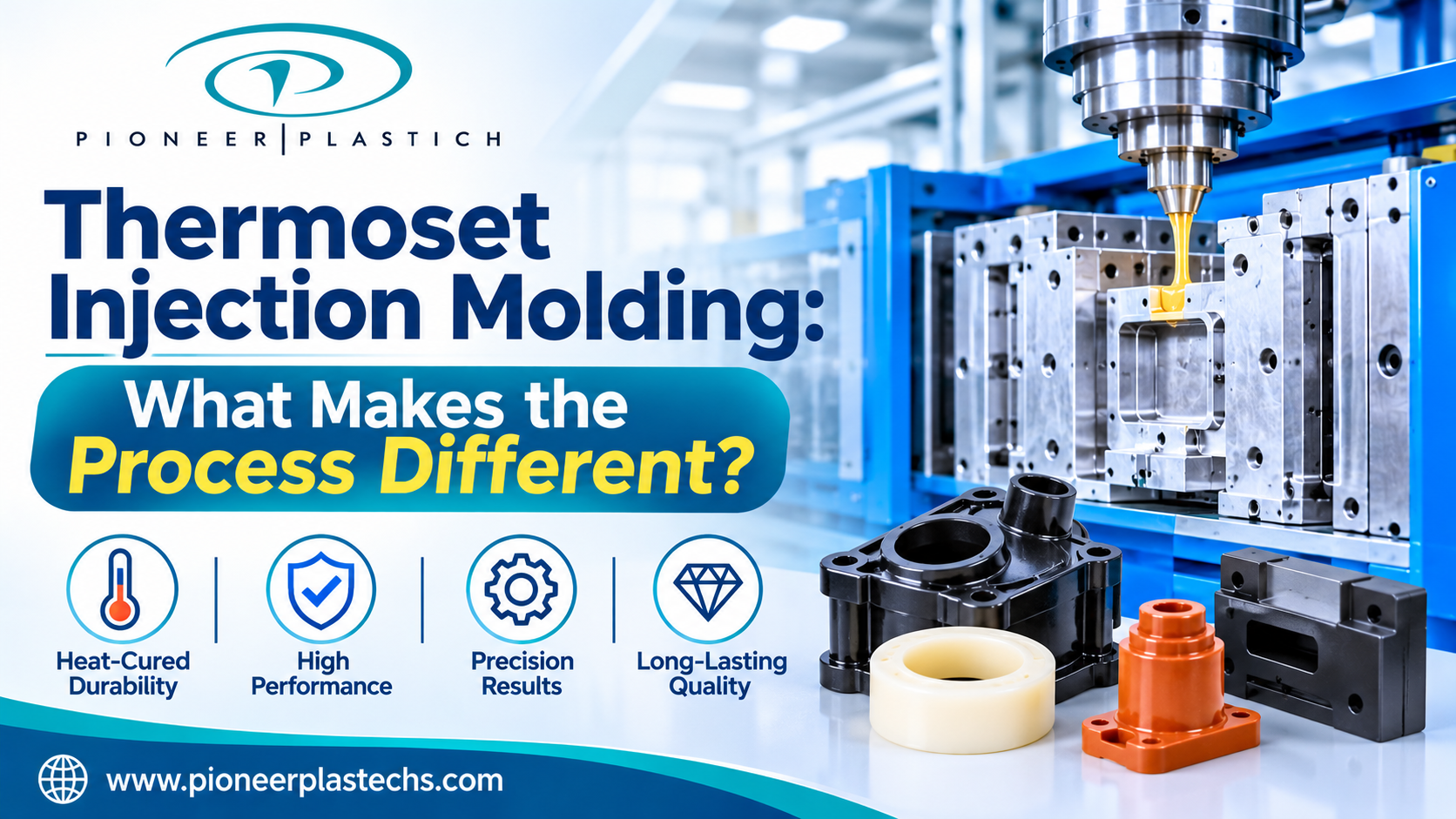
A plastic component exposed to heat, electrical stress, or aggressive chemicals needs more than an attractive finish. Its material must retain essential properties throughout its working life. Choosing the wrong molding process can create performance problems that become expensive after installation.
Thermoset Injection Molding offers a solution for applications requiring specific thermal, mechanical, and electrical characteristics. Unlike conventional thermoplastics, thermoset materials undergo an irreversible curing reaction during processing. Understanding this distinction helps manufacturers make better decisions about materials, tooling, and production methods.
Why Do Thermoset Materials Behave Differently?
Thermoset materials contain reactive compounds that form permanent cross-linked structures during curing. Heat activates the chemical reaction, transforming the material into a rigid component. Once cured, the material cannot simply be melted and reshaped.
This behavior can provide useful performance characteristics. Many thermoset formulations offer heat resistance, electrical insulation, dimensional stability, and resistance to certain chemicals. These properties make them suitable for components operating in demanding environments.
Common materials include phenolic, melamine, epoxy, and urea-based compounds. Each formulation has distinct processing requirements and performance characteristics. Selection should depend on the component’s intended function, not material popularity.
For example, an electrical housing may prioritize insulation and thermal stability. An industrial component may require chemical resistance and mechanical strength. Understanding the operating environment helps narrow down suitable formulations.
How Does Thermoset Plastic Injection Molding Work?
Thermoset Plastic Injection Molding involves preparing a thermoset compound and introducing it into a heated mold cavity. The material flows through the cavity before curing.
The process requires careful coordination between material preparation, injection pressure, mold temperature, and curing time. These variables influence filling behavior and the final component’s properties.
Unlike thermoplastic processing, cooling is not the primary mechanism responsible for solidification. The chemical reaction creates the permanent structure. The component must therefore remain inside the mold long enough to achieve suitable curing.
Several tooling features influence this process:
- Heating arrangements: Maintain suitable temperatures throughout the mold.
- Venting systems: Allow gases to escape during material flow and curing.
- Gate placement: Supports controlled filling and material distribution.
- Cavity design: Determines the component’s dimensions and geometry.
- Ejection mechanisms: Release cured components without causing damage.
Poor temperature distribution or inadequate venting can create defects. Careful mold engineering helps reduce these risks before production begins.
What Should Manufacturers Evaluate Before Tooling?
Tool development should begin with a detailed understanding of the component. Geometry, material behavior, production volume, and functional requirements all influence mold design.
Wall thickness deserves particular attention. Uneven sections may experience different curing conditions. This can affect dimensional consistency and create internal stresses.
Designers should also review corners, ribs, bosses, inserts, and undercuts. These features can influence material flow and tooling complexity. Appropriate draft and ejection arrangements should be considered during the design stage.
Material selection must happen alongside this evaluation. Different compounds respond differently to heat, pressure, and cavity geometry. Tooling designed without considering these characteristics may require expensive revisions.
Design-for-manufacturing analysis can identify potential problems before machining begins. Mold flow analysis can also help evaluate filling behavior and identify areas that need attention.
Why Does Tooling Quality Influence Final Performance?
Thermoset molds operate under repeated exposure to elevated temperatures and processing pressure. Their construction must support stable production conditions over extended periods.
Cavity accuracy influences dimensional consistency. Even small machining deviations can affect critical component features. CNC machining and EDM can produce accurate, intricate mold geometries.
Thermal management deserves equal attention. Uniform heating helps maintain consistent curing conditions across the cavity. Uneven temperatures can contribute to variations between molded components.
Venting is another important design consideration. Gases generated during processing need appropriate escape paths. Poor venting may cause burns, surface imperfections, or incomplete filling.
Tool maintenance should also be considered before production starts. Accessible inserts and replaceable wear components can simplify servicing. A maintainable mold is easier to support throughout its production life.
How Can a Mold Injection Manufacturer Improve Production Reliability?
Selecting a Mold Injection Manufacturer involves evaluating more than machinery and production capacity. Engineering knowledge determines how effectively a supplier translates product requirements into workable tooling.
A capable manufacturer should understand thermoset materials and their processing behavior. It should also coordinate design reviews, mold development, sampling, and quality inspection.
Buyers should examine the supplier’s approach to:
- Material evaluation and processing recommendations.
- Design-for-manufacturing and tooling reviews.
- Mold machining and component inspection.
- Trial procedures and sample approval.
- Production monitoring and defect investigation.
- Engineering changes and maintenance planning.
Communication matters throughout the project. Clear specifications and documented approvals help prevent misunderstandings. This becomes especially important when manufacturers and customers operate across different countries.
The supplier should also explain how trial results influence production decisions. A successful first sample does not automatically establish a stable manufacturing process.
Can Process Validation Reduce Manufacturing Defects?
Process validation helps establish suitable operating conditions before full production. It provides evidence that the mold and selected material can consistently produce acceptable components.
Engineers may evaluate injection pressure, material preparation, mold temperature, and curing time. Trial samples can then be inspected against approved specifications.
Dimensional checks identify deviations in critical features. Visual inspection can reveal burns, flash, incomplete filling, and surface defects.
When problems appear, the investigation should examine their causes. Adjusting machine settings without understanding the underlying issue may create inconsistent results.
For Thermoset Injection Molding, curing conditions deserve particular attention. An insufficient curing cycle may affect component performance. Excessive or uneven heating can also create processing difficulties.
Documented validation provides a useful reference for subsequent production runs. It helps teams recognize deviations and investigate changes systematically.
Where Do Thermoset Components Deliver the Most Value?
Thermoset materials serve applications where specific performance characteristics justify their processing requirements.
Electrical equipment is one important area. Insulating components, switchgear parts, and protective housings may benefit from suitable thermoset formulations.
Automotive and industrial applications offer further opportunities. Certain covers, housings, functional parts, and structural components require resistance to heat or demanding operating conditions.
However, thermosets are not automatically the best choice for every application. Thermoplastics may offer advantages in flexibility, reshaping, recyclability, or production economics.
A meaningful comparison should consider the complete application. Service conditions, manufacturing volume, tooling investment, and expected product life all influence the decision.
Choosing a Manufacturing Partner
Successful thermoset production requires material knowledge, precise tooling, controlled processing, and reliable inspection. A supplier should understand how these elements influence one another.
Pioneer Plastech (Shenzhen) Ltd.
provides mold manufacturing, injection molding, DFM analysis, precision machining, and inspection capabilities. Its engineering resources support complex tooling and specialized plastic manufacturing projects.
For manufacturers developing demanding thermoset components, an integrated technical approach can simplify development. Careful coordination between design, tooling, and production helps establish a stronger foundation for consistent results.







Leave a Reply