
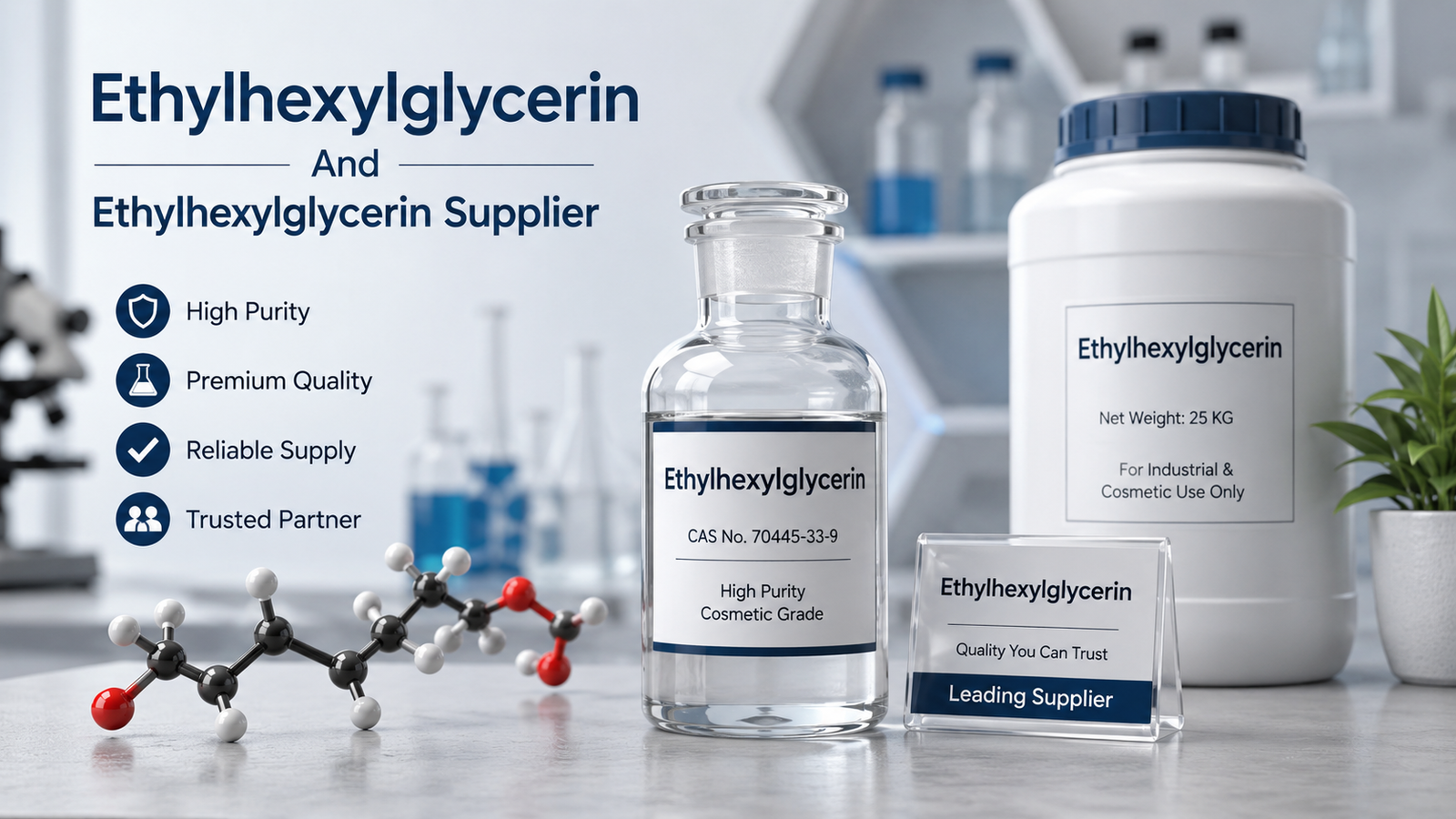
The personal care and cosmetics industry continuously looks for high-quality ingredients that improve product performance, stability, and consumer experience. One ingredient gaining considerable attention is Ethylhexylglycerin, a multifunctional cosmetic ingredient widely used in skincare, haircare, deodorants, and other personal care formulations.
Known for its skin-conditioning and antimicrobial-supporting properties, this ingredient helps manufacturers develop effective cosmetic products while improving overall formulation quality. As demand increases, choosing a reliable Ethylhexylglycerin Supplier becomes an important consideration for cosmetic manufacturers, formulators, and ingredient distributors.
Understanding its applications, benefits, quality requirements, and sourcing considerations can help businesses make informed purchasing decisions.
What Is Ethylhexylglycerin?
Ethylhexylglycerin is a multifunctional cosmetic ingredient derived from glycerin. It is commonly used in personal care formulations as a skin-conditioning agent and preservative booster.
Its versatility makes it suitable for different cosmetic applications. Rather than serving only one purpose, it can contribute to several formulation benefits.
Some important characteristics include:
-
Skin conditioning: Helps improve the feel and softness of cosmetic formulations.
-
Preservative boosting: Supports the effectiveness of certain preservative systems.
-
Deodorant applications: Helps reduce odor-causing bacterial activity.
-
Formulation compatibility: Can be incorporated into various personal care products.
-
Multifunctionality: Offers several formulation benefits through a single ingredient.
These properties make Ethylhexylglycerin a valuable choice for manufacturers developing modern personal care products.
Major Benefits of Ethylhexylglycerin in Cosmetics
The growing popularity of this ingredient is closely connected to its multifunctional performance.
1. Supports Preservative Systems
Cosmetic products containing water and other organic ingredients can become susceptible to microbial contamination. Ethylhexylglycerin is frequently used alongside suitable preservatives to improve overall preservation performance.
However, it should not automatically be considered a complete standalone preservative. Manufacturers must validate the complete formulation through appropriate microbial testing.
2. Improves Skin Conditioning
Ethylhexylglycerin contributes to the skin-conditioning properties of cosmetic formulations. It can help improve product feel and provide a smoother sensory experience.
This makes it useful in lotions, creams, serums, and other skincare preparations.
3. Useful in Deodorant Formulations
Another important application is deodorant manufacturing. Its antimicrobial-supporting properties make it useful in formulations designed to control unpleasant body odor.
4. Supports Multifunctional Formulations
Modern cosmetic manufacturers prefer ingredients that provide multiple benefits without unnecessarily complicating their formulations. Ethylhexylglycerin supports this approach by combining skin-conditioning and preservative-boosting functions.
Common Applications of Ethylhexylglycerin
This ingredient is used across several personal care categories.
| Product Category | Application |
|---|---|
| Face creams | Skin conditioning and preservative support |
| Body lotions | Improved formulation feel |
| Facial cleansers | Preservative-system support |
| Deodorants | Odor-control formulations |
| Haircare products | Conditioning and formulation support |
| Serums | Multifunctional cosmetic formulations |
| Sunscreen products | Supporting ingredient in suitable formulations |
The final application depends on formulation compatibility, ingredient concentration, and product requirements.
How to Choose a Reliable Ethylhexylglycerin Supplier
Selecting the right supplier is essential for maintaining consistent product quality and reliable manufacturing operations.
Businesses should evaluate more than just the quoted purchase price.
1. Check Product Quality
A professional Ethylhexylglycerin Supplier should provide consistent material quality and relevant technical documentation.
Request the following documents:
-
Certificate of Analysis (COA).
-
Safety Data Sheet (SDS).
-
Technical Data Sheet (TDS).
-
Batch identification and traceability information.
-
Relevant quality and compliance documentation.
2. Evaluate Product Consistency
Consistency between batches is important for cosmetic manufacturers. Variations in raw material specifications can affect formulation performance and production quality.
Choose suppliers with appropriate quality-control procedures and documented specifications.
3. Consider Supply Capacity
A dependable supplier should be capable of supporting both small and bulk purchasing requirements. Reliable inventory management and realistic delivery schedules can help prevent manufacturing interruptions.
4. Review Technical Support
An experienced Ethylhexylglycerin Supplier should understand the ingredient’s applications and provide relevant technical information.
This support can help manufacturers evaluate compatibility, handling requirements, and formulation suitability.
5. Compare Pricing and Commercial Terms
Price is important, but purchasing decisions should also consider packaging, minimum order quantities, transportation, payment conditions, and product documentation.
Ethylhexylglycerin Supplier: What Should Buyers Compare?
Before finalizing a purchasing agreement, businesses should compare suppliers using practical evaluation criteria.
| Evaluation Factor | What to Check |
|---|---|
| Quality | Consistent product specifications |
| Documentation | COA, SDS, and TDS |
| Availability | Regular stock and supply capacity |
| Packaging | Suitable storage and transportation |
| Pricing | Competitive and transparent quotations |
| Support | Technical and customer assistance |
| Delivery | Reliable dispatch and logistics |
A structured comparison helps businesses identify a suitable sourcing partner for long-term requirements.
Important Storage and Handling Considerations
Proper storage helps maintain the quality of cosmetic raw materials.
Manufacturers and distributors should follow the product-specific instructions provided by the manufacturer.
General precautions include:
-
Store the ingredient in its original, tightly closed container.
-
Follow the recommended temperature and storage conditions.
-
Protect the material from unsuitable environmental exposure.
-
Avoid contamination during handling and transfer.
-
Follow the supplied Safety Data Sheet.
-
Maintain proper batch records and inventory rotation.
Always consult the supplier’s technical documentation before incorporating the ingredient into production.
Frequently Asked Questions (FAQs)
1. What is Ethylhexylglycerin used for?
It is commonly used as a skin-conditioning agent, deodorant ingredient, and preservative booster in cosmetic and personal care products.
2. Is Ethylhexylglycerin a preservative?
It is primarily considered a multifunctional cosmetic ingredient and preservative booster. It should not automatically replace a complete preservative system.
3. Is Ethylhexylglycerin suitable for skincare products?
Yes. It is commonly incorporated into creams, lotions, serums, and other skincare formulations, depending on formulation requirements.
4. Why is Ethylhexylglycerin used in deodorants?
It helps support odor-control formulations by reducing the activity of certain odor-associated bacteria.
5. How do I find a reliable Ethylhexylglycerin Supplier?
Look for suppliers offering consistent quality, technical documentation, transparent pricing, dependable delivery, and appropriate customer support.
6. What documents should an Ethylhexylglycerin Supplier provide?
Buyers should request a Certificate of Analysis, Safety Data Sheet, Technical Data Sheet, and relevant quality documentation.
7. Can Ethylhexylglycerin be used in haircare products?
Yes. It can be included in suitable shampoos, conditioners, and other haircare formulations.
8. Is Ethylhexylglycerin suitable for bulk purchasing?
Yes. Manufacturers and distributors can source it in bulk, subject to supplier availability, packaging options, and commercial terms.
9. What affects the price of Ethylhexylglycerin?
Pricing depends on product specifications, order quantity, packaging, supplier terms, transportation, and prevailing market conditions.
10. Why is choosing the right Ethylhexylglycerin Supplier important?
A reliable supplier helps maintain raw material consistency, provides essential documentation, supports timely deliveries, and reduces sourcing-related risks.
Read more –
https://sportgalax.com/read-blog/27126
https://devansh-001.livejournal.com/37641.html?newpost=1
https://frendlo.com/blogs/64791/How-Do-2-3-Dimethyl-2-3-Diphenylbutane-and-1




Leave a Reply