
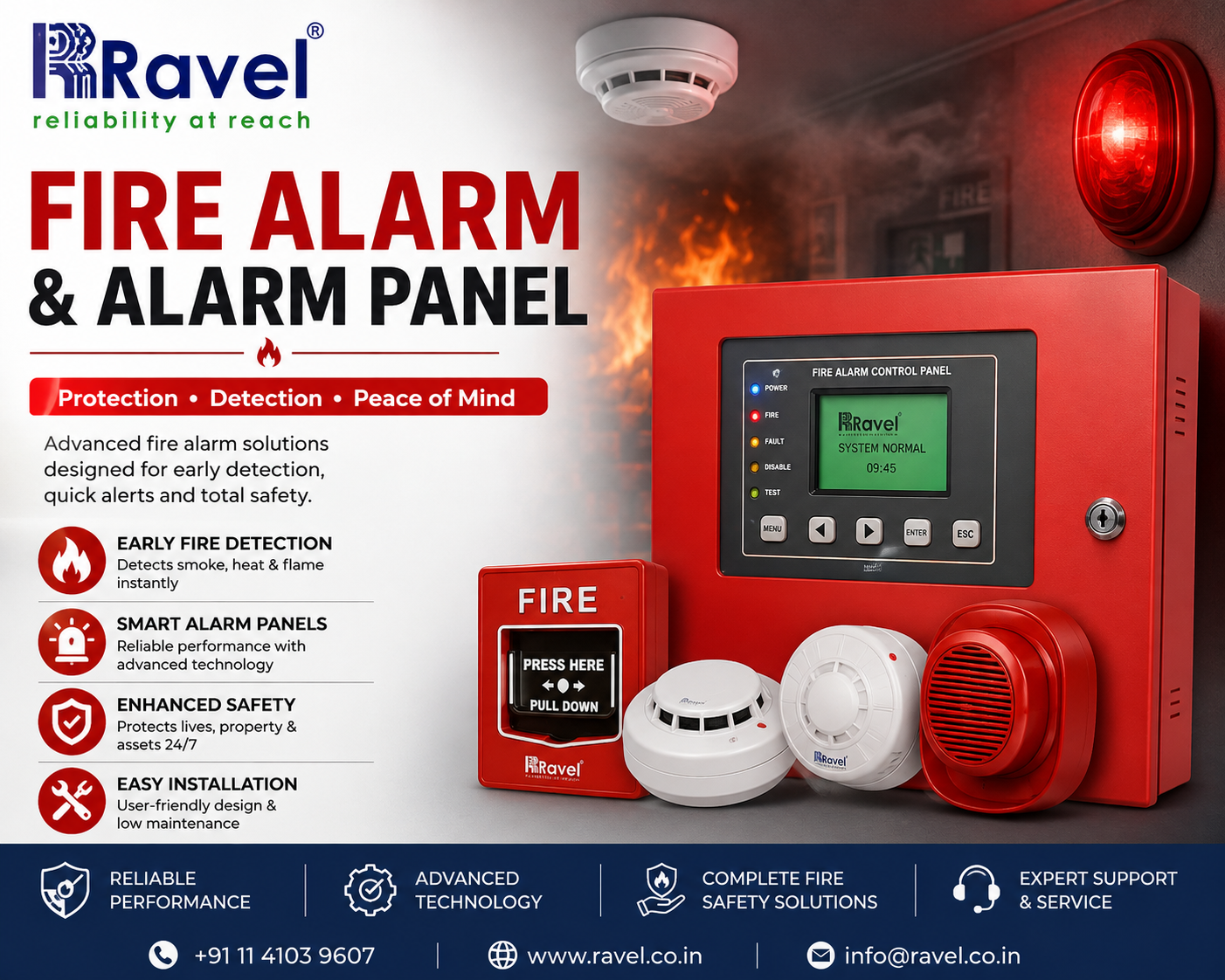
A fire alarm is a vital component of industrial and warehouse safety because these facilities can contain combustible materials, electrical equipment, machinery, storage systems, and other potential fire hazards. An alarm panel provides centralized management of many detection and notification devices, helping facility teams identify alarm conditions and respond according to established procedures. Because industrial environments can be complex, fire alarm systems should be carefully designed around building size, storage configuration, environmental conditions, occupancy, and potential fire risks.
Fire Risks in Industrial Facilities
Industrial buildings can contain machinery, electrical panels, raw materials, packaging, chemicals, fuels, and finished products.
Warehouses may have high storage racks and large open areas.
These conditions can affect detector selection and placement.
Role of a Fire Alarm
The fire alarm system provides detection and notification.
Depending on the design, it can include smoke detectors, heat detectors, flame detectors, manual call points, sounders, strobes, and other devices.
The system should be designed to provide appropriate coverage.
Alarm Panel as the Control Center
The alarm panel receives signals from connected field devices.
It can indicate alarms, faults, and other system conditions.
Depending on the system architecture, it may also communicate with remote monitoring equipment or other building safety systems.
Detector Selection
Industrial environments may require different detection technologies.
Smoke detectors can be suitable in many clean environments.
Heat or flame detection may be considered for particular applications.
The selection should be based on the actual fire risk and environmental conditions.
Large Warehouse Considerations
Warehouses may have high ceilings, tall racks, airflow from ventilation systems, and large storage areas.
These factors can influence how smoke travels.
A professional fire protection assessment can help determine suitable detection strategies.
Alarm Notification
Sounders and visual indicators should provide suitable warning.
In noisy industrial environments, audible alarms may need to be supplemented with visual notification.
The notification strategy should reflect workplace conditions.
System Integration
Some industrial fire alarm systems can integrate with emergency communication, ventilation controls, suppression systems, or monitoring equipment.
Such integration requires careful engineering.
Maintenance
Industrial fire alarm systems should be inspected and tested regularly.
The alarm panel should be checked for faults.
Detectors, manual call points, sounders, batteries, wiring, and connected equipment should also be examined.
FAQs
Q1. Why are fire alarms important in warehouses?
They can provide early warning of potential fire conditions and support emergency response procedures.
Q2. What does an alarm panel do in an industrial system?
It receives signals from detection devices and manages system alarms, faults, and connected outputs.
Q3. Are smoke detectors always suitable for warehouses?
Not necessarily. Storage, ceiling height, airflow, and environmental conditions can affect detector selection.
Q4. Can industrial fire alarm systems be integrated with other equipment?
Some systems support integration, depending on the design and equipment.
Q5. How should industrial fire alarms be maintained?
They should be inspected and tested according to manufacturer recommendations and applicable requirements.
CTA
Industrial and warehouse environments need fire detection systems designed around their specific risks. A suitable fire alarm and properly configured alarm panel can provide centralized detection and notification management. Work with qualified fire safety professionals to design, install, test, and maintain the system according to the facility’s requirements.








Leave a Reply