
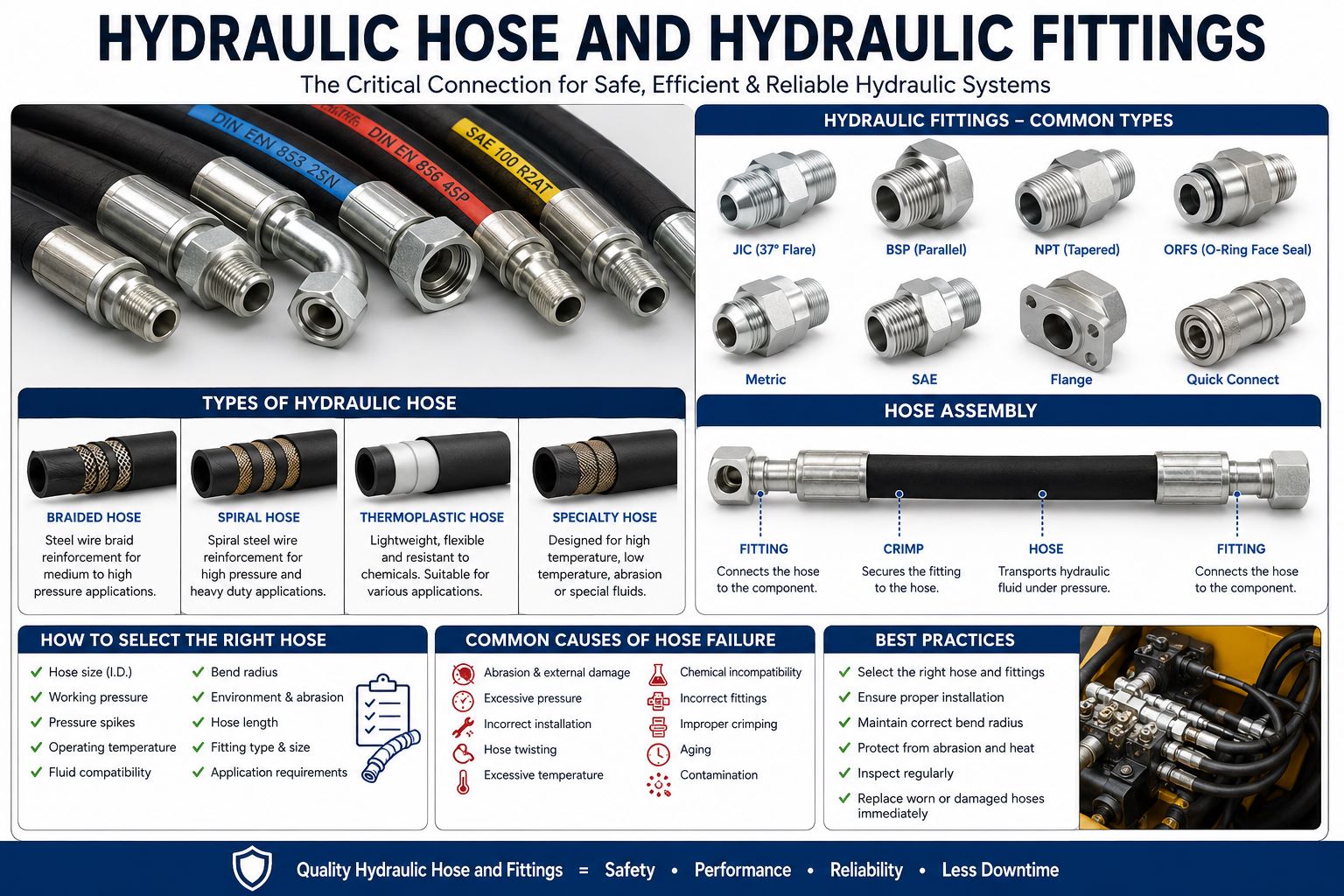
Hydraulic systems are widely used in construction equipment, manufacturing machinery, agricultural machines, transportation systems, and industrial applications. At the heart of these systems are hydraulic hose assemblies and hydraulic fittings, which work together to transport pressurized hydraulic fluid safely and efficiently.
Choosing the correct components is essential for system performance, safety, and service life. The wrong hose, fitting, pressure rating, or connection can lead to leaks, equipment downtime, and costly repairs. This guide explains how hydraulic hoses and fittings work, where they are used, and how to select the right components.
What Is a Hydraulic Hose?
A hydraulic hose is a flexible tube designed to carry hydraulic fluid between different components of a hydraulic system. Unlike ordinary industrial hoses, hydraulic hoses are engineered to withstand high pressure, vibration, temperature changes, and demanding operating conditions.
A typical hydraulic hose consists of several layers:
-
An inner tube that carries hydraulic fluid
-
Reinforcement made from wire or textile materials
-
An outer cover that protects against abrasion, oil, heat, and environmental exposure
Hydraulic hoses are available in different pressure ratings, sizes, materials, and reinforcement designs. Selecting the correct hose depends on the application’s working pressure, temperature, fluid type, and movement requirements.
What Are Hydraulic Fittings?
Hydraulic fittings are connection components used to join hoses, pipes, valves, pumps, cylinders, and other hydraulic equipment. They create secure connections while allowing hydraulic fluid to flow through the system without unnecessary leakage.
Common types include:
-
Straight fittings
-
Elbow fittings
-
Tee fittings
-
Cross fittings
-
Adapters
-
Quick-connect couplings
-
Flange fittings
-
Reducers and connectors
Fittings are manufactured in materials such as steel, stainless steel, and other specialized alloys. The appropriate material depends on pressure, corrosion resistance, temperature, and operating environment.
How Hydraulic Hoses and Fittings Work Together
A hydraulic hose cannot perform reliably without a suitable connection. The hose transfers fluid, while the fitting provides the secure interface between the hose and the hydraulic equipment.
For example, a hydraulic cylinder may require a hose connected through an elbow fitting to accommodate limited installation space. The hose must have the correct internal diameter and pressure rating, while the fitting must match the hose assembly and equipment connection.
Proper compatibility is important because even a high-quality hose can fail if it is paired with an incorrectly selected or improperly installed fitting.
Key Factors When Choosing Hydraulic Hose and Hydraulic Fittings
Before purchasing components, consider the following factors:
-
Working pressure: Select components that safely exceed the system’s maximum operating pressure.
-
Hose size: The internal diameter must support the required fluid flow without excessive pressure loss.
-
Temperature: Verify that both hose and fitting materials can handle the operating temperature.
-
Fluid compatibility: Ensure the hose’s inner tube is suitable for the hydraulic fluid being used.
-
Movement: Applications involving bending or vibration require hoses designed for repeated movement.
-
Connection type: Check thread standards, fitting configuration, and connection dimensions.
-
Environment: Outdoor, chemical, high-abrasion, or corrosive environments may require specialized materials.
Hydraulic Hose vs Hydraulic Fittings
| Feature | Hydraulic Hose | Hydraulic Fittings |
|---|---|---|
| Main purpose | Transfers hydraulic fluid | Connects hydraulic components |
| Construction | Flexible reinforced tube | Rigid connection component |
| Selection factors | Pressure, size, temperature, fluid | Thread, pressure, material, configuration |
| Common issue | Cracking, abrasion, leakage | Loose or damaged connections |
| Installation | Requires correct routing | Requires correct tightening and compatibility |
Both components are essential, and neither should be selected independently of the other.
Common Applications of Hydraulic Hose and Hydraulic Fittings
Hydraulic hose and hydraulic fittings are used in numerous industries because hydraulic power can deliver substantial force through compact equipment.
Typical applications include:
-
Excavators and loaders
-
Cranes and lifting equipment
-
Agricultural machinery
-
Manufacturing equipment
-
Material-handling systems
-
Mining machinery
-
Hydraulic presses
-
Automotive and transportation equipment
-
Marine and offshore machinery
In these applications, reliable fluid connections help maintain productivity and reduce unexpected equipment failures.
Common Causes of Hydraulic Hose Failure
Hydraulic hose failures can happen because of several preventable issues. Common causes include excessive pressure, incorrect routing, extreme temperatures, abrasion, chemical exposure, improper installation, and excessive bending.
Warning signs may include:
-
Visible cracks or cuts
-
Bulging or damaged outer covers
-
Hydraulic fluid leakage
-
Excessive hose flexibility or deformation
-
Corrosion around fittings
-
Unusual vibration or noise
Regular inspection can identify problems before they become serious equipment failures.
Best Practices for Hydraulic Hose Maintenance
Proper maintenance extends component life and improves system reliability.
-
Inspect hoses regularly for visible damage.
-
Check fittings for leaks and corrosion.
-
Keep hoses away from sharp edges and excessive heat.
-
Avoid twisting hoses during installation.
-
Maintain the correct bending radius.
-
Replace damaged components rather than attempting unsafe repairs.
-
Keep replacement hoses and fittings clean before installation.
-
Follow manufacturer-recommended pressure and temperature limits.
A planned inspection routine is usually more cost-effective than repairing equipment after a sudden hydraulic failure.
How to Select the Right Hydraulic Components
A practical selection process starts with understanding the machine and operating conditions. Identify the required hose size, maximum working pressure, temperature range, fluid type, connection style, and environmental conditions.
Then verify that the hose and fitting specifications are compatible. For critical applications, working with a qualified hydraulic component supplier can help ensure the assembly meets the equipment’s technical requirements.
Frequently Asked Questions
What is a hydraulic hose used for?
A hydraulic hose transports pressurized hydraulic fluid between components such as pumps, valves, cylinders, and motors.
What are hydraulic fittings used for?
Hydraulic fittings connect hoses and other hydraulic components while creating a secure fluid pathway.
Can any hose be used in a hydraulic system?
No. Hydraulic hoses must be specifically rated for the system’s pressure, temperature, fluid, and operating conditions.
How often should hydraulic hoses be inspected?
Inspection frequency depends on application and operating conditions, but regular visual checks are recommended, particularly in demanding environments.
Why do hydraulic hoses leak?
Leaks can result from damaged hoses, loose fittings, incorrect installation, worn seals, excessive pressure, or incompatible components.
Can hydraulic fittings be reused?
Some fittings may be reusable, while others are designed for specific assembly methods. Always follow the component manufacturer’s instructions.
What causes hydraulic hose abrasion?
Contact with machinery, sharp edges, improper routing, vibration, and insufficient protection can cause abrasion.
Why is hose bending radius important?
Excessive bending can damage internal reinforcement and reduce hose service life, potentially causing premature failure.
Are stainless steel hydraulic fittings better?
Stainless steel fittings can provide excellent corrosion resistance, but the best material depends on pressure, environment, fluid, and application requirements.
How can hydraulic system reliability be improved?
Use correctly rated components, ensure proper installation, inspect regularly, prevent contamination, and replace worn parts promptly.








Leave a Reply