
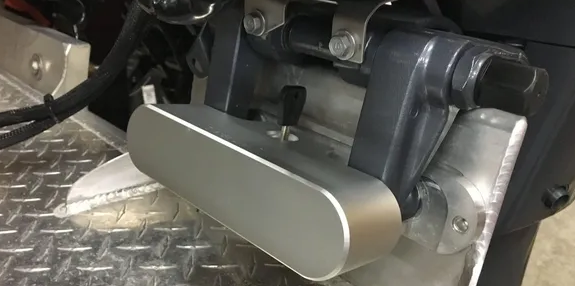
Leaving a boat unattended at a public dock can make even a routine outing worth a little extra thought. Boats contain several valuable components, and the outboard motor is often among the most expensive and accessible. Learning how to properly lock outboard motor equipment gives boat owners a practical way to add physical protection without making security unnecessarily complicated. The smartest approach is to combine a purpose-built lock with sensible habits that reduce easy opportunities for theft.
What Makes Motor Security Important?
An outboard motor is designed to be removable, which is useful when maintenance, replacement, or transportation is necessary. That same characteristic can become a security concern when the boat is left unattended.
A motor that is securely mounted for normal operation is not automatically protected against unauthorized removal. Dedicated security hardware can create an additional obstacle around the motor’s mounting area, requiring more time and effort from anyone attempting to take it.
Public docks also introduce an element of unpredictability. There may be plenty of activity around a boat during the day, but no owner can reasonably assume that other people will notice every interaction with their vessel.
Good security, therefore, starts with a simple principle: do not rely on visibility alone. Instead, consider several basic precautions:
- Secure the motor whenever the boat is left unattended.
- Keep portable valuables out of obvious view.
- Inspect mounting hardware periodically for wear or corrosion.
- Choose storage areas with appropriate lighting and access controls when possible.
- Use multiple security measures when the boat will be unattended for extended periods.
These steps do not guarantee that theft cannot occur. They simply reduce the number of easy opportunities available to someone looking for an unsecured target.
What Should a Reliable Motor Lock Offer?
A motor lock has one fundamental job: to make unauthorized removal more difficult. Its construction and design determine how effectively it can perform that role over time. Marine environments can be demanding on hardware. Moisture, spray, changing temperatures, and saltwater exposure can affect metal components, making material selection particularly relevant for boat security equipment.
Those characteristics highlight an important consideration when comparing security equipment. Strength should not be judged by appearance alone. The materials, construction, intended application, and environmental suitability all contribute to whether a security device makes sense for repeated marine use.
Installation matters, too. According to the manufacturer, the system can be installed within minutes. That practical element is easy to overlook, but equipment that fits naturally into a boater’s routine is more likely to be used consistently.
How Can Boaters Improve Everyday Protection?
A lock is most effective when it becomes part of a broader security routine. There is no need to turn every boating trip into a complicated security exercise. A few consistent habits can make protection more deliberate.
For anglers and recreational boaters, Boat Trolling Motor Locks can provide an additional layer of protection for equipment that may otherwise remain exposed when the vessel is unattended.
It is also worth thinking beyond the motor itself. Electronics, fishing equipment, batteries, fuel-related equipment, and other accessories can attract unwanted attention. Removing portable valuables when practical and keeping permanent equipment less visible can reduce the boat’s appeal as a target.
Regular inspection is another small habit with considerable value. Security hardware should be checked for obvious damage, corrosion, or changes in fit. Any lock used around water should also be maintained in accordance with the manufacturer’s guidance.
The bigger idea is layered security. A motor lock, sensible storage, reduced visibility, and basic awareness work together more effectively than expecting one device to solve every security concern.
Which Locking Approach Makes Sense?
Choosing security equipment should begin with the actual vulnerability being addressed. A general-purpose lock may not provide the same type of protection as hardware designed specifically around an outboard motor’s mounting arrangement.
For boat owners researching Boat Motor Locks in Washington, the same evaluation criteria should apply as they would anywhere else: consider construction, durability, intended use, installation, and how easily the device can become part of a normal boating routine.
There is also value in avoiding exaggerated expectations. No physical lock should be presented as an absolute guarantee against theft. Good security is about resistance and deterrence. The more difficult and time-consuming unauthorized removal becomes, the less attractive an easy opportunity for theft can be.
That makes consistency just as important as the equipment itself. A strong lock left unused provides no practical protection. A properly selected lock that is used whenever the boat is unattended can become a meaningful part of responsible ownership.
Conclusion
Protecting an outboard motor does not require an elaborate security system. It requires understanding that the motor is a valuable, removable component and taking reasonable steps to make unauthorized removal more difficult.
The Tylerbay Lock team offers a dedicated option for boat owners who want to add an additional physical layer of protection. Ultimately, smart boat security is built through consistency. Secure the motor before leaving, keep other valuable equipment protected, inspect the hardware regularly, and make security part of the normal routine rather than something remembered only after a problem occurs.














Leave a Reply